


Contact Us
Best Electric Wheelchairs for Seniors in 2026
Buying a power wheelchair is rarely about “more features.” It’s about whether you can turn in your hallway, stay comfortable, and get to appointments without a stressful loading routine.
Safety note: This article is general information, not medical advice. A clinician or Assistive Technology Professional (ATP) can help confirm fit, seating needs, and safe driving setup.
What is an electric wheelchair that’s suitable for seniors?
A senior-friendly electric wheelchair is one that supports independence without adding new risks—and that fits your home, your body, and your caregiver reality.
In plain terms, you want:
-
Simple controls (predictable joystick + braking)
-
Comfort you can tolerate daily (seat/back/armrests/foot support)
-
Home maneuverability (footprint + turning performance)
-
Realistic portability (if you travel, a truly foldable power wheelchair)
-
Battery you can live with (charging routine and range)
Best electric wheelchairs for seniors: our 2026 top 5
How we ranked: portability + comfort + maneuverability + transparent specs + U.S. serviceability.
1) INTCO E-Lite — Best lightweight pick for errands and easy transport
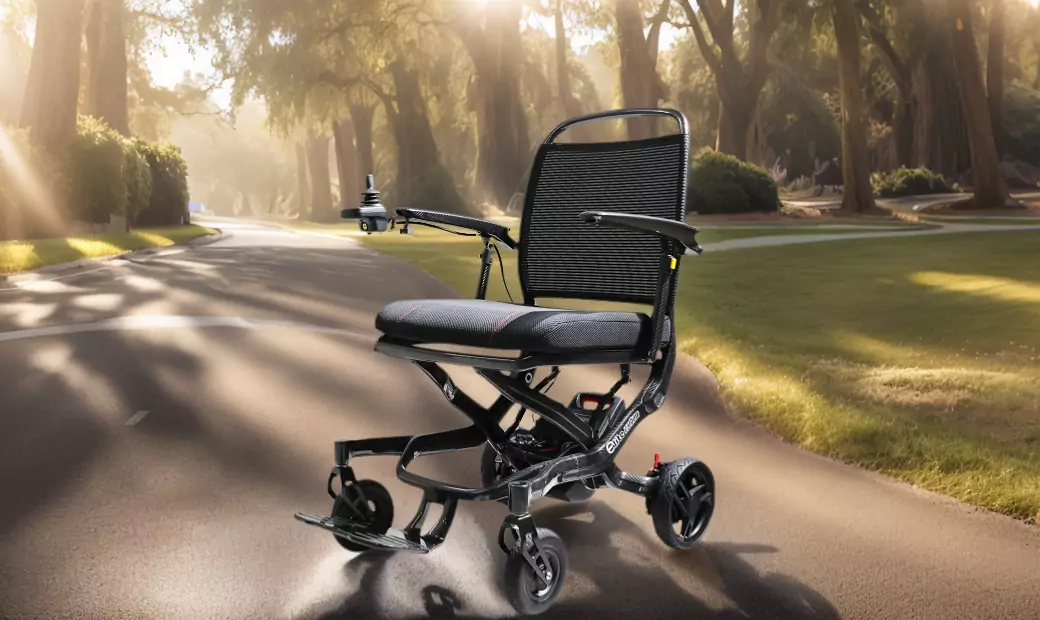
If the #1 deal-breaker is weight—because you or a caregiver will lift it—start here.
Why it’s senior-friendly (based on first-party specs):
-
Lightweight build: INTCO lists total mass (with battery) at 13.5 kg and 136 kg max load on the INTCO E-Lite power wheelchair specs.
-
Everyday safety touches: INTCO notes anti-tippers, plus reflectors and a rear light on the same product page.
-
Portable intent: it’s designed to be easy to fold, and the page also mentions manual/electric mode switching.
Best for:
-
Seniors who want a lightweight electric wheelchair for appointments, indoor use, and smoother outdoor surfaces.
-
Caregivers who need a chair that’s more realistic to load into a vehicle.
Watch-outs:
-
INTCO lists a max safe slope of 6° and 15 km range on the product page. If you regularly deal with steep ramps or long outdoor distances, you may want a heavier-duty base.
Quick decision tip: If you’re debating between “portable” and “comfortable all-day,” E-Lite leans portable. Pair it with a comfort-first seat cushion if you’ll be sitting for long stretches.
2) INTCO STAR — Best for longer range and more robust outdoor handling
Some seniors don’t need “ultralight.” They need a chair that feels planted, lasts longer between charges, and handles daily terrain more confidently.
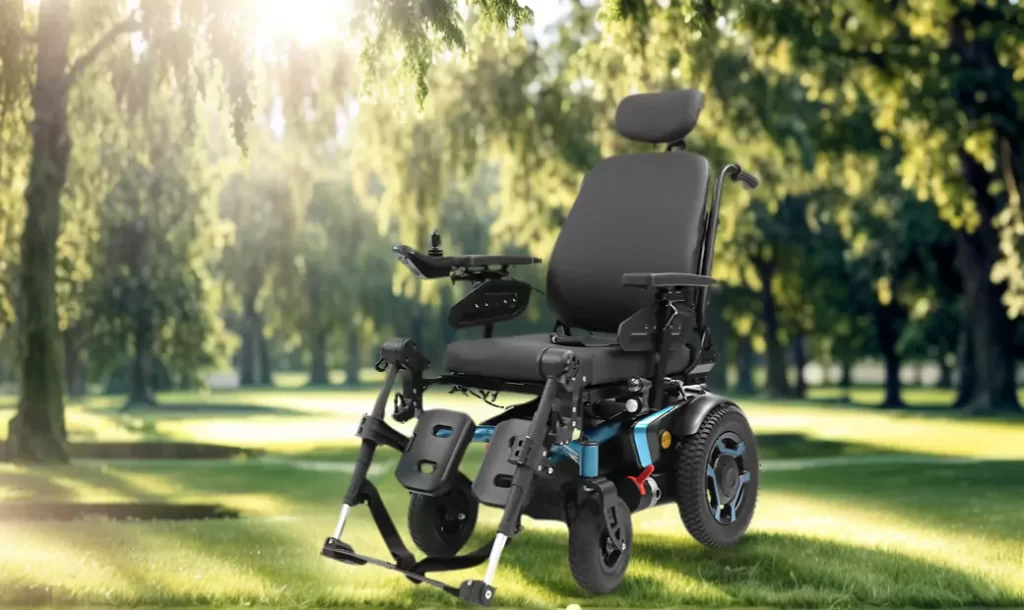
Why it’s senior-friendly (based on first-party specs):
-
More power and range: INTCO lists 2 × 340W motors, up to 30 km travel range, and 10 km/h max speed on the INTCO STAR power wheelchair specs.
-
Stability cues: the STAR page mentions rear suspension, a 10° max safe slope, and a 50 mm obstacle height capability.
-
Adjustability: the page lists adjustable seat width and seat depth ranges, plus multi-angle adjustment.
Best for:
-
Seniors who spend time both indoors and outdoors and want more battery headroom.
-
Caregivers who prefer a sturdier chair for longer days.
Watch-outs:
-
INTCO lists total mass at 106.5 kg (battery included). This is not a “lift it into the trunk” chair.
3) Pride Mobility Jazzy Passport — Best folding travel chair with mainstream support
When you want folding convenience and a big service footprint, the Jazzy line is often short-listed.
Caring.com’s review of “the best lightweight folding electric wheelchair” recommends the Jazzy Passport and lists these decision-grade specs: 24.25″ turning radius, up to 7.9 miles range (250 lb user), 250 lb capacity, and a travel-safe lithium battery on Caring.com’s Jazzy Passport overview (2025).
Best for:
-
Seniors who want a foldable power wheelchair for travel and predictable indoor maneuvering.
-
Caregivers who value accessories, parts availability, and a widely known brand.
Real-world note (verifiable):
-
Some retailers note this model has been discontinued/replaced in certain markets. If you’re shopping in 2026, confirm current availability (or the closest successor) before you commit.
4) WHILL Model F — Best “fold fast, store small” option for tight spaces
The WHILL Model F is built around the idea that you should be able to fold quickly, store in a closet, and still drive confidently in everyday spaces.
Scootaround lists a 30.7″ turning radius, up to 12.4 miles range, 250 lb capacity, and folding in under 3 seconds on the WHILL Model F page.
Why seniors and caregivers shortlist it:
-
Portability and storage are a first-class feature, not an afterthought.
-
Reviews on the same page include a practical travel detail: one reviewer says it “folds up so small” it can fit behind the chair in a wheelchair-accessible cab, helping reduce taxi hassles.
Best for:
-
Apartment living, narrow hallways, frequent appointments, and caregivers who want fast fold + compact storage.
Watch-outs:
-
Seat comfort and transfer style matter. If you rely on a specific transfer technique, confirm the armrest/footplate setup works for you.
5) Golden Technologies Cricket — Best ultra-portable feel (travel-friendly battery)
If your priority is “light and easy” but you still want a recognizable U.S. mobility brand ecosystem, the Golden Cricket is worth a look.
Hoveround lists 9.3 miles range, 22″ turning radius, 300 lb capacity, and a carbon fiber frame for the Cricket on its product page: Cricket foldable portable electric wheelchair specs.
Best for:
-
Seniors who want an agile chair for indoor and light outdoor use.
-
Caregivers who want less bulk and a tight turning circle.
Comfort reality check:
-
In buyer reviews across retailer sites, lightweight travel chairs often get praised for portability and criticized for firm seating. Plan for a cushion upgrade if comfort becomes the limiting factor.
A quick note on “full-time rehab chairs” (Permobil M3 Corpus)
If you need advanced seating functions (tilt, recline, leg elevation, seat lift) for pressure management or complex positioning, you may be in a different category than travel chairs.
A clinic overview of the Permobil M3 Corpus highlights mid-wheel drive maneuverability and power seating options like tilt and recline: Permobil M3 Corpus overview. These chairs are typically evaluated and configured with professional support.
How to choose the right electric wheelchair (the short checklist that prevents regret)
Most “bad purchases” happen because the chair was chosen for one scenario (travel) and used in a different one (all-day at home), or because the home layout wasn’t considered.
Use this decision checklist before you buy:
Step 1: Start with where you’ll use it most
-
Mostly indoors (home, senior living, tight doorways): prioritize turning radius, footprint, and predictable braking.
-
Mixed indoor/outdoor (sidewalks, parking lots, ramps): prioritize stability, range, and obstacle/slope handling.
If you’re unsure which type matches your life, INTCO has a straightforward overview of common evaluation factors in its guide: Key Considerations for Selecting the Right Power Wheelchair.
Step 2: Decide what “portable” means for your household
Be honest:
-
Will you (or a caregiver) lift it into a trunk?
-
Or will it travel in a van/SUV with a ramp or lift?
A chair can be “foldable” and still be unrealistic to lift. This is where lightweight models like INTCO E-Lite tend to make more sense.
Step 3: Verify fit and comfort like you’re buying a mattress
For seniors, comfort is not optional.
Check:
-
Seat width/depth and whether you can sit with hips and knees aligned comfortably.
-
Armrest height (shoulders relaxed).
-
Footplate position (no pressure points on calves/heels).
Step 4: Don’t ignore battery and charging habits
Range only helps if you reliably charge.
Ask:
-
Is the battery removable for charging on a countertop?
-
Can the charger location work with your routine (and caregiver routine)?
Step 5: Confirm service, parts, and returns before you fall in love
Decision-stage shoppers should treat service like a feature.
-
Who services it in your zip code?
-
What’s the warranty on frame/electronics?
-
What’s the return policy and restocking fee?
Pro Tip: If possible, do a short in-home driving test: doorway turns, bathroom entry, and turning around in the kitchen. Most regrets show up in the first 10 minutes.
CTA (high intent): If you’re deciding between a lightweight travel chair and a longer-range daily driver, compare your must-haves against two INTCO options (E-Lite and STAR), then bring your shortlist to a local mobility provider for a fit check and demo.
FAQ
Are electric wheelchairs covered by Medicare in the U.S.?
Sometimes. Coverage depends on medical necessity, your doctor’s documentation, and whether the chair is appropriate for use in the home. Start by asking your doctor and a local DME provider what documentation is required for your situation.
What’s the difference between a power wheelchair and a mobility scooter?
A power wheelchair typically uses a joystick and can be better for tight indoor spaces and users who need more postural support. Scooters often have a tiller steering column and can work well for users who can transfer easily and want outdoor cruising.
What turning radius is “good” for a senior living apartment?
There’s no single magic number, but a smaller turning radius (or a chair that can pivot cleanly in place) is generally easier in bathrooms and narrow hallways. Use your home’s tightest space (often the bathroom doorway + turn) as your real test, not a spec sheet.
If you’re comparing spec sheets, prioritize the chair’s power wheelchair turning radius alongside its overall width—those two numbers often predict “will this fit at home?” better than top speed.
Should I choose lithium-ion or lead-acid batteries?
Lithium-ion batteries are often lighter and easier for travel (some are airline-approved battery power wheelchair setups, depending on battery size and airline rules), while lead-acid packs are common on heavier, longer-range chairs. The best choice is the one you can safely charge and manage consistently.
How do I know if a chair is safe on ramps?
Look for the manufacturer’s maximum safe slope rating, and always use ramps conservatively—especially if surfaces are wet or uneven. If you regularly use ramps, prioritize stability and follow the chair’s manual and your clinician’s guidance.
Next step: Make your shortlist, measure your doorways, and schedule a demo. If you want to start with two INTCO options designed for different lifestyles, compare the lightweight INTCO E-Lite with the longer-range INTCO STAR.