


Contact Us
Europe Wheelchair Market Analysis 2026: Electric vs Manual Wheelchair Trends
Introduction
The Europe wheelchair market in 2026 is not only expanding in size but also undergoing a structural transformation in demand composition. While total market growth remains steady, the balance between manual and power wheelchairs is shifting due to demographic changes, reimbursement policies, and technological advancements.
For manufacturers, distributors, and healthcare procurement professionals, understanding this evolving demand structure is essential for strategic positioning in one of the world’s most mature mobility aid markets.
Europe Wheelchair Market Overview
Europe continues to be a key region in the global mobility aid industry, supported by advanced healthcare infrastructure and an aging population.
According to Grand View Research, the Europe wheelchair market was valued at approximately USD 1.63 billion in 2023 and is projected to reach USD 2.58 billion by 2030, growing at a CAGR of around 6.8%.
In terms of market scale and usage:
-
Over 18 million wheelchair users across Europe
-
Annual demand exceeding 3 million units
As reported by 360 Research Reports, Europe accounts for nearly 30% of global wheelchair demand, making it one of the most influential regional markets.
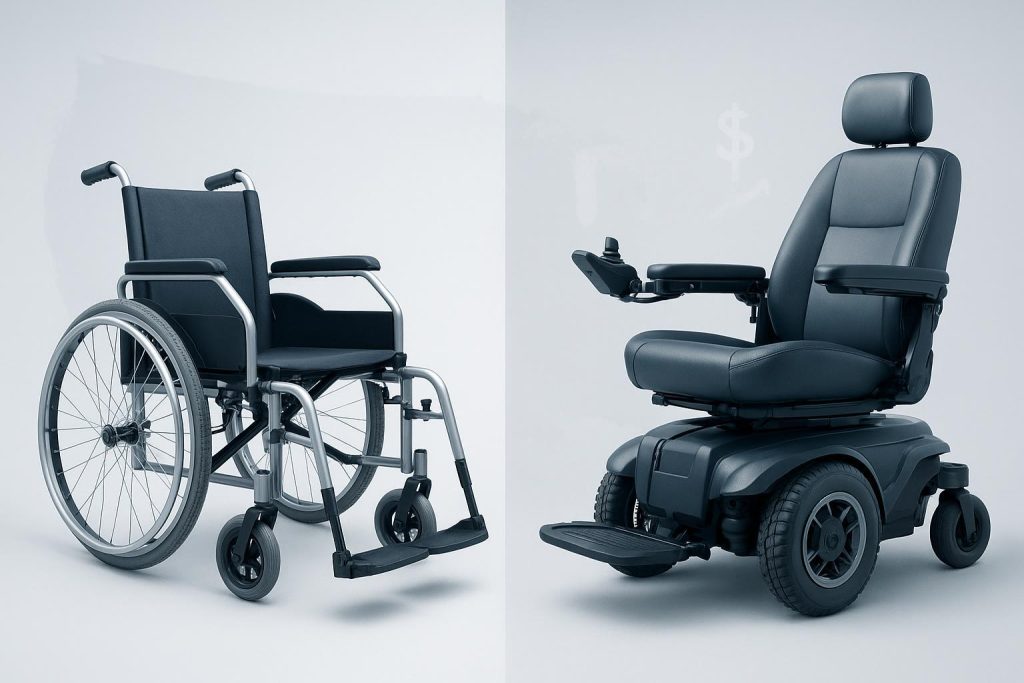
Manual vs Power Wheelchair Demand Structure
Market Share Distribution
Despite rapid innovation in electric mobility, manual wheelchairs continue to dominate:
-
Manual wheelchairs: ~70–72% of total demand
-
Power wheelchairs: ~28–30%
This demand structure highlights a critical industry reality:
manual wheelchairs lead in volume, while power wheelchairs lead in growth potential.
Why Manual Wheelchairs Continue to Dominate
Significant Cost Advantage
One of the most decisive factors is pricing.
Data from IndexBox shows that:
-
Average manual wheelchair price: ~$200 per unit
-
Average electric wheelchair price: ~$1,100 per unit
This substantial price gap—more than five times—directly impacts procurement decisions, especially for:
-
Public hospitals
-
Government tenders
-
Non-profit healthcare programs
As a result, manual wheelchairs remain the default choice for bulk purchasing scenarios.
Import-Driven Market Structure
Europe is highly dependent on imports, particularly for manual wheelchairs.
According to IndexBox, imports account for a significant portion of supply, with manual models representing nearly 87% of total imports.
This indicates that Europe functions primarily as a consumption-driven market rather than a manufacturing hub, creating strong opportunities for OEM suppliers.
Institutional Procurement Preferences
Healthcare institutions prioritize:
-
Cost efficiency
-
Durability
-
Ease of maintenance
As highlighted by 360 Research Reports, more than 49% of hospitals maintain large wheelchair fleets, where manual models are preferred due to their simplicity and lower lifecycle costs.
Growth Drivers of Power Wheelchairs
Although smaller in market share, power wheelchairs are expanding rapidly and reshaping the competitive landscape.
Faster Growth Rate
According to Mordor Intelligence, the Europe electric wheelchair market is expected to grow at approximately 9–10% CAGR between 2025 and 2030, significantly outpacing the overall market.
Aging Population and Functional Needs
Europe’s aging demographic is a major structural driver:
-
Increasing number of elderly users with limited upper-body strength
-
Growing need for independent mobility solutions
This shift is transforming power wheelchairs from a premium option into a functional necessity.
Technological Advancements
Innovation is accelerating adoption, including:
-
Lithium battery systems replacing traditional lead-acid batteries
-
Smart control interfaces and joystick precision
-
Indoor-outdoor hybrid mobility designs
According to Mordor Intelligence, these advancements are redefining electric wheelchairs as intelligent mobility devices rather than traditional medical equipment.
Key Market Trends in 2026 and Beyond
Dual-Market Structure Will Persist
The European market is evolving into a two-tier system:
-
Manual wheelchairs → dominate volume and institutional demand
-
Power wheelchairs → drive revenue growth and innovation
This structure is expected to remain stable over the next decade.
Pricing Will Continue to Shape Adoption
Despite strong growth, power wheelchairs still face barriers:
-
High upfront cost
-
Uneven reimbursement policies across countries
As noted by Mordor Intelligence, wider insurance coverage and policy support will be critical to accelerating adoption.
Supply Chain Globalization
Europe’s reliance on imports is expected to continue.
Data from IndexBox suggests that regional production remains limited compared to demand, reinforcing the role of global OEM manufacturers in the supply chain.
Homecare as a Core Growth Segment
Demand is increasingly shifting from hospitals to homecare environments.
According to Global Growth Insights, elderly users account for over 50% of total wheelchair demand, with long-term care and home-based rehabilitation becoming key application scenarios.
Product Evolution and Differentiation
Future product development will focus on:
-
Lightweight materials for manual wheelchairs
-
Smart and connected features for power wheelchairs
-
Modular designs for flexible manufacturing
This evolution indicates a shift toward user-centric and technology-driven product strategies.
Market Outlook: Manual vs Power Wheelchairs
From 2026 to 2030, the European wheelchair market will be defined by segmented growth dynamics:
-
Manual wheelchairs will maintain dominance in unit volume due to affordability
-
Power wheelchairs will capture a growing share of market value
Rather than replacement, the two categories will coexist in a complementary structure, serving different user needs and procurement environments.
INTCO Medical: Supporting Global Mobility Demand
As demand for mobility solutions continues to diversify, manufacturers with scalable production and engineering capabilities play an increasingly important role.

INTCO Medical is a global manufacturer of rehabilitation and mobility products, offering a comprehensive portfolio of manual and electric wheelchairs. With advanced manufacturing systems, international certifications, and strong OEM/ODM capabilities, the company supports distributors, healthcare providers, and brands across global markets.
By combining cost efficiency with product innovation, INTCO Medical is well-positioned to meet the evolving demands of the European wheelchair market.
FAQ
1. What is the size of the Europe wheelchair market?
According to Grand View Research, the market is projected to reach USD 2.58 billion by 2030, with steady growth driven by aging populations and healthcare demand.
2. Which type of wheelchair is more commonly used in Europe?
Manual wheelchairs dominate the market, accounting for over 70% of total demand, mainly due to their affordability and suitability for institutional procurement.
3. Are power wheelchairs becoming more popular?
Yes. Mordor Intelligence reports that power wheelchairs are the fastest-growing segment, with a CAGR of around 9–10%, driven by aging users and technological improvements.
4. Why is Europe dependent on wheelchair imports?
According to IndexBox, Europe relies heavily on imports due to limited local manufacturing capacity, especially for manual wheelchairs.
5. What are the main drivers of wheelchair demand in Europe?
Key drivers include:
-
Aging population
-
Rising disability rates
-
Growth in homecare services
-
Advancements in mobility technology