


Contact Us
Aluminum Wheelchair vs Steel Wheelchair in 2026: Which One Should You Choose?
Aluminum vs. steel isn’t a “better vs. worse” debate. It’s a fit question.
-
Choose aluminum when you need a lighter chair that’s easier to lift and less likely to rust.
-
Choose steel when you need higher weight capacity or you’re buying for a budget-sensitive fleet.
One more thing: for hospitals, clinics, and transport providers, test results matter more than the material name. Ask for ISO durability and transport documentation for the exact model you’re buying.
Aluminum wheelchair vs steel wheelchair head to head
Below is a quick scan comparing common configurations. Ranges and notes are directional and can vary by model and options (as of 2026-02-27).
Weight and portability
If portability and caregiver lift burden are priorities, a lightweight wheelchair based on aluminum is typically the easier daily partner. Leading aluminum frames in the manual category can reach single digit kilogram frame weights, which markedly reduces effort during car transfers and stair carries. For quick context on category differences, see the internal explainer comparing light and standard designs in Lightweight vs standard wheelchairs.
For powered mobility, an electric aluminum wheelchair can trim system mass compared with comparable steel frames, helping with vehicle loading or shared transport. Do note that batteries, motors, and seating systems dominate total weight, so a frame swap won’t override those larger contributors.
Version scope note: Published specs can change rapidly. Always confirm model weight and transport weight on the manufacturer’s latest page.
Durability and standards
Material doesn’t guarantee durability. Design and testing do.
When you compare models, look for proof that the chair passed recognized wheelchair tests. A common reference is ISO 7176-8, which covers frame strength checks like static load, impact, and fatigue. The ISO committee’s Wheelchair Standards Guide 2023 explains what each ISO 7176 part is for (ISO, 2023).
Transport is a separate issue. If the chair will be used as a seat in a vehicle, ask the supplier for ISO 7176-19 labeling and instructions. UMTRI’s WC19 / ISO 7176-19 testing brochure shows what the labeling means and how crash-style testing is done (UMTRI, 2021).
Corrosion resistance and maintenance
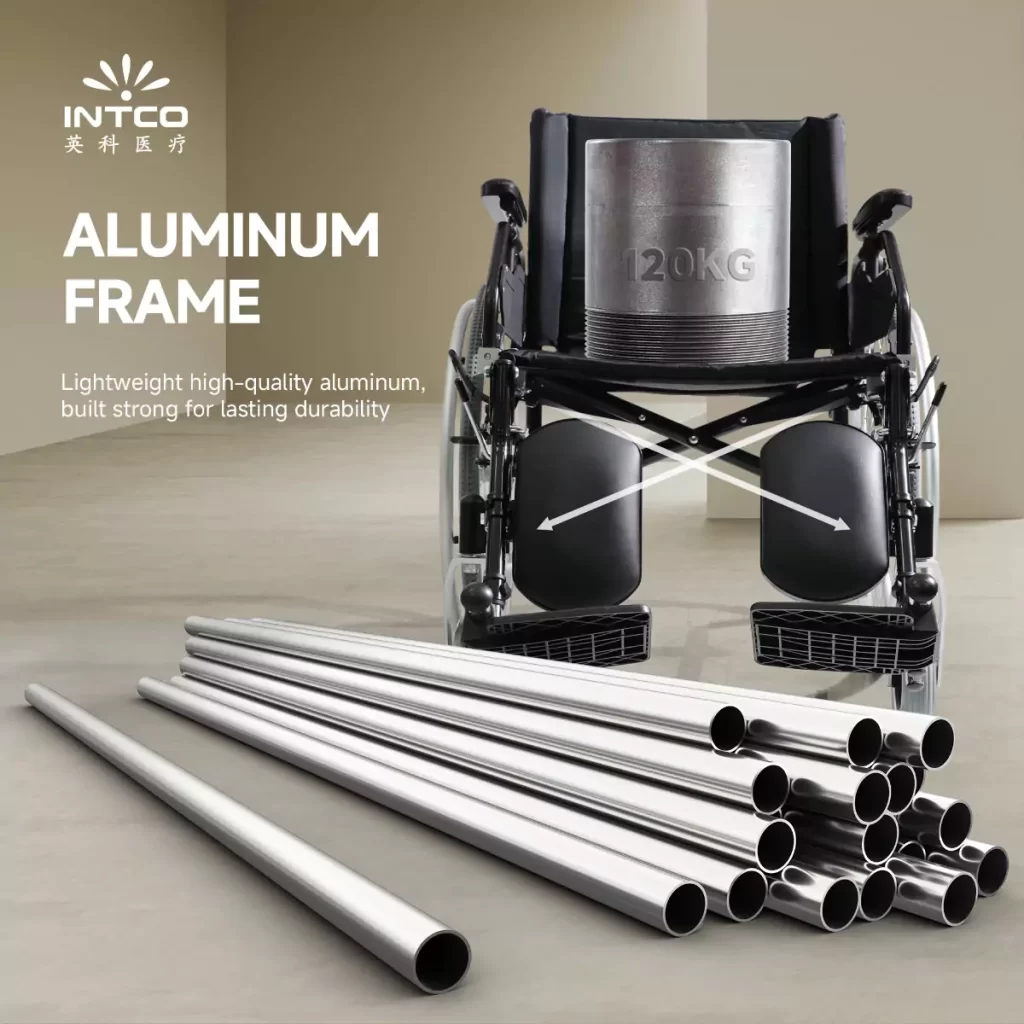
Aluminum naturally forms a protective oxide layer, making aluminum frames inherently resistant to rust in humid environments and under frequent disinfectant cleaning. Steel frames can perform well, too, but they depend on paint or powder coatings and consistent upkeep to prevent corrosion.
For a manufacturing view on metals selection, see this short read on material choices in wheelchair production, Exploring material importance in wheelchair manufacturing. In clinical settings where daily wipe downs and occasional splash exposure are the norm, aluminum’s corrosion profile can reduce cosmetic degradation and cut unplanned maintenance.
Load capacity and stability
Steel frames dominate the heaviest capacity classes, with bariatric models commonly rated from 450 lb to 700 lb in manual categories. Aluminum manuals more often cluster in the ~220–275 lb range depending on configuration. Stability is assessed separately: ISO 7176-1 defines static stability test methods that manufacturers use to rate tipping performance. When assessing a chair, check the rated capacity on the spec sheet and confirm whether anti tippers or wider wheelbases are offered for the intended environment.
Compliance, transport and aluminum wheelchair ramp fit

A wheelchair rarely works alone. It has to fit ramps, doorways, vehicles, and daily handling.
For ramp basics, the U.S. Access Board’s 2010 ADA Standards, Chapter 4 sets a common reference point: a 1:12 maximum slope and 36-inch minimum clear width for new construction (U.S. Access Board).
When you shop for an aluminum wheelchair ramp, check two things first:
-
Geometry: is the length enough to keep the slope manageable for your doorway height?
-
Capacity: can it handle the combined weight of the user, the wheelchair, and bags or accessories?
For vehicle transport, always check ISO 7176-19 labeling and instructions when the chair is used as a seat in a motor vehicle. The tie-down and occupant restraint setup is more important than whether the frame is aluminum or steel.
Repairability and total cost of ownership
Serviceability influences downtime and lifecycle cost. Mild steel is widely weldable in the field and has a deep pool of repair technicians. Aluminum repairs usually require TIG welding skill and may involve more controlled shop conditions. Parts logistics and availability can dominate the equation for both materials.
For budgeting, consider a simple five year TCO model: purchase price, expected annual maintenance, average repair cost, and downtime cost per day. Aluminum can carry a higher upfront price but may reduce corrosion related maintenance in humid or frequent cleaning environments. Steel may minimize CapEx for institutional fleets, especially in heavy duty assignments, but plan for coating touch ups and rust vigilance.
How to choose
Use this quick checklist to narrow your shortlist:
-
If portability, frequent car loading, or caregiver lifting is routine, prioritize an aluminum lightweight wheelchair in manual form and consider an electric aluminum wheelchair if powered assistance is essential.
-
If your top requirement is maximum load capacity, impact robustness, or a budget minded fleet, shortlist steel across manual and powered lines with verified test evidence.
-
For humid facilities or frequent disinfectant cleaning, favor aluminum for its inherent corrosion resistance.
-
For any chair intended for use as a motor vehicle seat, request ISO 7176-19 labeling and supporting documentation, alongside ISO 7176-8 durability evidence.
-
Procurement teams should ask vendors for certificates to operate in regulated markets, plus SLA and parts lead time disclosures.
If you need a concrete starting point for a manual aluminum wheelchair spec sheet, review a representative product such as INTCO YK9063 manual aluminum wheelchair and compare weight, capacity, and available accessories against your facility’s needs.
FAQ
Q1: Which material is safer for transport in vehicles
A: Safety in transport depends on ISO 7176-19 compliance and proper labeling, not on the frame material itself. Ask suppliers to provide documentation and user instructions consistent with the UMTRI WC19 and ISO 7176-19 overview (2021).
Q2: Do aluminum frames always last longer than steel
A: No. Durability varies by model design and the tests it passes. ISO 7176-8 defines standardized static, impact, and fatigue evaluations, summarized in the ISO wheelchair standards guide (ISO, 2023). Use published test evidence to compare options.
Q3: What ramp rules should I check for home or clinic access
A: Confirm geometry and capacity. The ADA sets a 1 to 12 maximum slope and a 36 inch minimum clear width for new construction, detailed in ADA Chapter 4 on accessible routes and ramps. Ensure the aluminum wheelchair ramp capacity exceeds the combined user plus wheelchair weight.
Q4: Are powered aluminum chairs easier to lift into cars
A: Often yes, because aluminum reduces frame weight. However, batteries and motors dominate total mass in power chairs, so confirm transport weights and whether the chair folds or breaks into lighter modules.
Hospitals, distributors, and caregivers alike can make a confident choice by matching material to use case, verifying ISO test compliance, and modeling lifecycle costs. Also consider a supplier with documented OEM and regulatory credentials. For example, INTCO Medical supports OEM and ODM programs with international certifications suitable for regulated markets. If you are compiling a wheelchair supplier comparison for healthcare industry purchasing, this kind of evidence backed shortlist will save time and reduce audit risk.
Pricing and version scope note: Model availability, specifications, and prices change by region and date. Treat the figures above as directional and confirm on current spec sheets as of your purchase date.
Internal references used once each
-
Lightweight vs standard wheelchairs explainer: https://www.intcowheelchair.com/news/lightweight-wheelchair-vs-standard-key-differences-uncovered
-
Materials article: https://www.intcowheelchair.com/news/exploring-material-importance-in-wheelchair-manufacturing
-
Manual aluminum product example: https://www.intcowheelchair.com/manual-wheelchair-yk9063
External references used once each
-
ISO 7176 overview guide: https://committee.iso.org/files/live/sites/tc173/files/Library/Wheelchair%20Standards%20guide%202023-12-13%20with%20table.pdf
-
UMTRI WC19 transport testing: https://umtri.umich.edu/wts-testing-brochure_dec2021/
-
ADA Chapter 4 ramps and routes: https://www.access-board.gov/ada/chapter/ch04/